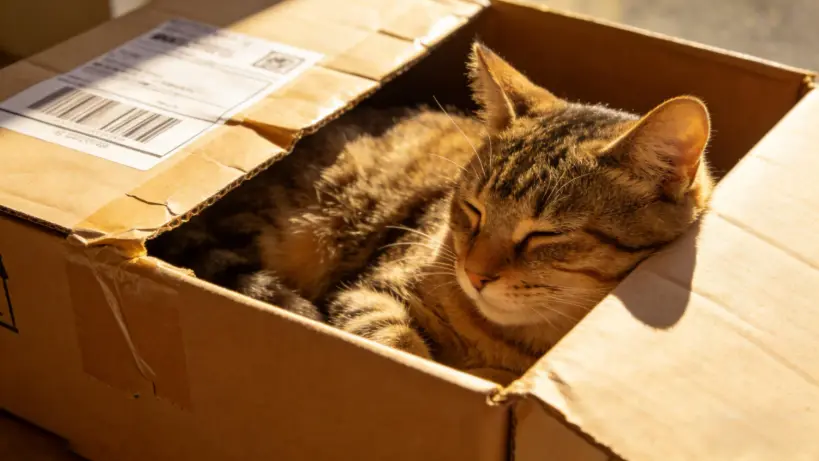
If you’re a cat parent, you’ve likely experienced this: you splurge on a fancy cat bed, only to find your feline curled up in a crumpled cardboard box from the mail. Or maybe you’ve seen the viral videos—tape a square on the floor, and your cat will instantly plop down inside it.
This quirky behavior isn’t random. It’s rooted in cats’ instincts, psychology, and even their visual perception. Every cat is unique, so some may obsess over boxes more than others, but the appeal is nearly universal. Let’s break down why these simple enclosures—real or imaginary—are cat nirvana.
1. Boxes Are a Built-In Safe Haven (Instinct at Work)
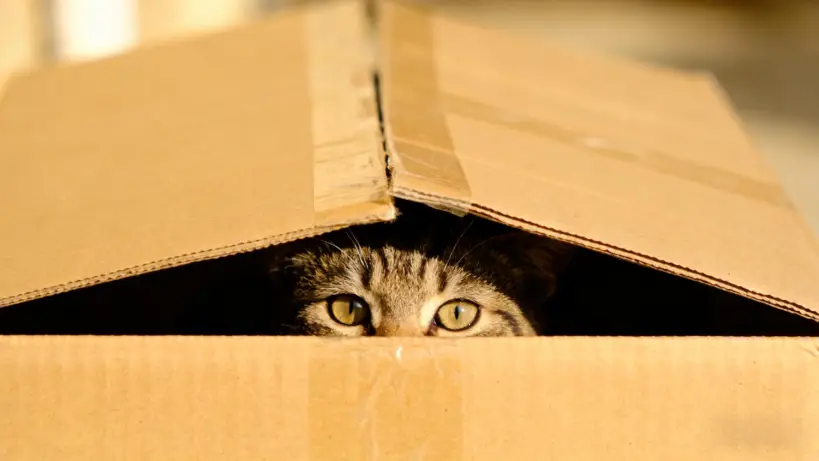
Cats are both predators and prey in the wild, and their survival hinges on feeling hidden. A cardboard box mimics the small, enclosed spaces—like tree hollows or rock crevices—where wild cats seek shelter from threats.
Even indoor cats hold onto this instinct. A box lets them observe their surroundings without being seen, easing anxiety and helping them feel in control. Research has shown cats with access to boxes adapt better to new environments and have lower stress levels than those without.
Every cat’s need for safety varies: some prefer tight boxes, while others opt for roomier ones. This uniqueness is part of what makes your cat so special.
2. The Warmth Factor: Boxes Are Natural Heaters
Cats are creatures of comfort, and they thrive in warmer temperatures than humans—around 86 to 97°F (30 to 36°C) is ideal for most felines. Cardboard is an excellent insulator, trapping a cat’s body heat to create a cozy microclimate.
The tight space of a box also encourages cats to curl up, which helps them conserve heat. That’s why you’ll often find your cat snuggled in a box on cooler days, even if the house feels warm to you.
Some cats may skip boxes for sunbeams or warm blankets, and that’s perfectly okay—their preferences are as unique as their personalities.
3. Visual Illusion: Why Even a Drawn Square Works
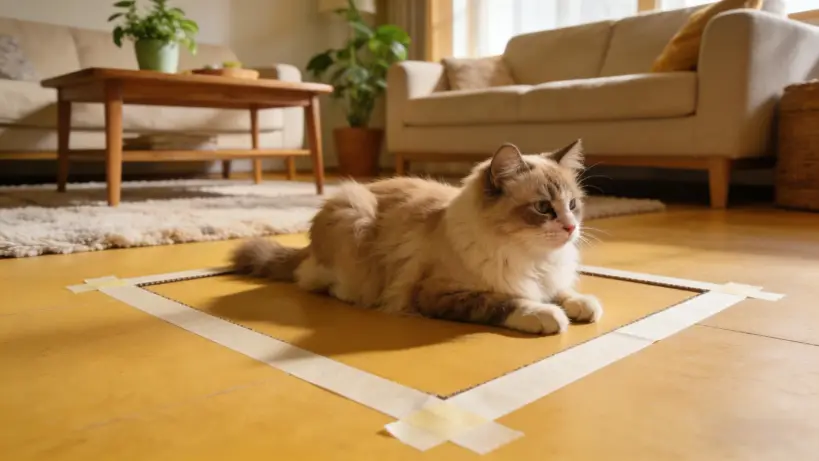
One of the most fascinating aspects of this behavior is that cats are drawn to squares, even when they’re just lines on the floor. This isn’t magic—it’s all about how cats perceive visual boundaries.
Animal behaviorists have discovered that cats can see “illusory contours”—they mentally fill in the blanks to perceive a complete shape, even when it’s not physically present. A 2020 experiment with 500 cat parents found cats chose a “virtual” square (an optical illusion) just as often as a real one.
This quirk reveals that cats’ brains process shapes differently than ours, but it all ties back to their need for defined spaces that feel safe and secure.
4. Boxes Are Playful, Stress-Relieving Retreats
Beyond safety and warmth, boxes are endless sources of entertainment for cats. They’re perfect for pouncing, hiding, and practicing hunting instincts—your cat might ambush a toy (or your foot) from inside, satisfying their natural drive to hunt.
Boxes also act as stress relievers. When cats feel overwhelmed—by new pets, visitors, or changes in the home—they can retreat to their box for a quiet escape. It’s their very own sanctuary to decompress.
Some cats may even use boxes to mark territory, rubbing their cheeks (which have scent glands) on the edges to claim it as their own.
When to Check In With Your Vet
Loving boxes is normal for cats, but there are times to pay close attention. If your cat suddenly starts hiding in boxes (or other tight spaces) more than usual, it could be a sign of stress, anxiety, or even illness.
Behavioral changes—like avoiding interaction, loss of appetite, or lethargy paired with excessive hiding—warrant a visit to your vet. Never assume hiding is “just a cat thing”; it’s always better to rule out health concerns.
Every cat is unique, and their love for boxes (or drawn squares) is just one part of their wonderful personality. Embrace this quirky habit—it’s a sweet reminder of their wild instincts and their need for comfort. And when in doubt, consult your vet to keep your feline friend happy and healthy.