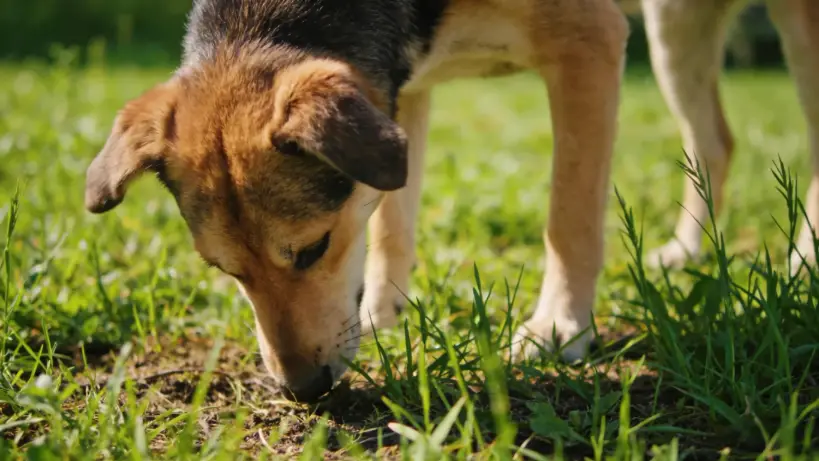
If you’ve ever taken your dog for a walk and watched them stop, nose glued to the ground, sniffing like there’s no tomorrow—you’ve probably wondered: What on earth are they “reading” out there? For dogs, smell isn’t just a sense—it’s their main way of experiencing the world.
This natural gift lets them pick up traces we humans can’t even wrap our heads around—even “see” moments we’ve long forgotten, like having a time-traveling scent camera. In fact, every dog’s sense of smell is one-of-a-kind, and this talent is the key to how they connect with the world around them.
First, a Direct Comparison: How Powerful Is a Dog’s Olfactory “Hardware”?
We humans rely on sight to make sense of the world, but dogs live in a world driven entirely by scent—and they’re born with the “hardware” to prove it. Humans have about 6 million olfactory cells in our noses, while the average dog has a whopping 220 to 230 million—more than 30 times as many.
Even more impressive? The inside of a dog’s nose is lined with folded ridges that, when unfolded, cover an area about the size of an A3 sheet of paper—4 times larger than ours. This design gives them a super-efficient way to trap scent molecules, and the part of their brain that processes smell is over 40 times more developed than ours, too.
Every dog’s scent talent is unique, too. Take scent hounds like bloodhounds, for example—their olfactory cell densities are 300 times higher than humans. Small companion dogs, while a bit less powerful, still blow our scent-detecting abilities out of the water.
More Than Just Sensitive: Dogs Can “Break Down” Scents and Even “Read” Time
A dog’s sense of smell is way more than just “sensitive.” They can detect specific scents at concentrations as low as one part per trillion—that’s like dissolving a single spoonful of sugar in an Olympic-sized swimming pool, and they’d still pick it out without blinking an eye.
What’s even cooler, though? They can pick out a single scent from a total mess—like finding your favorite song in a chaotic symphony. Think about it: they can zero in on their owner’s scent, even surrounded by grass, dirt, and other animals’ smells, no sweat.
Most amazing of all, though, is this: Dogs can “read” time through scent. Scent molecules fade over time, and dogs can tell how long ago a trace was left by how strong or faint the smell is—even tracking a scent trail that’s a week old, like they’re watching a replay of the past.
Why Can They “See” Old Traces? The Key Lies in Scent “Timeliness”
A lot of us have wondered: How exactly do dogs pick up traces from days ago? It all boils down to scent’s “staying power”—when something (or someone) passes by, the scent molecules they leave behind don’t vanish right away. Instead, they hang around in the environment for hours, days, even longer.
A dog’s nose is like a high-tech detector, built to pick up those faint, leftover scent molecules. They use the scent’s strength and distribution to map out where something went, and in ideal conditions—moderate humidity and little wind—well-trained dogs can even track scents that are way older.
Of course, it also depends on the dog itself—senior dogs, with all their years of experience, might be more accurate at identifying scents than puppies. Every dog has their own unique “scent rhythm,” and that’s part of what makes them so special.
Everyday Secrets Hiding in Your Dog’s Sense of Smell
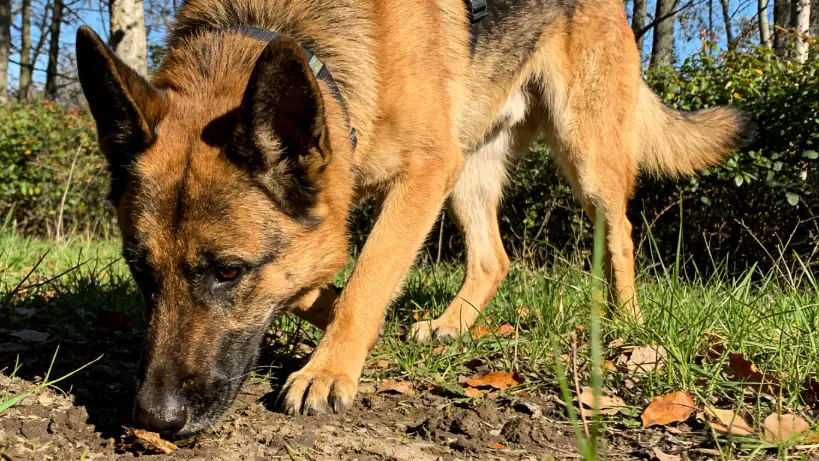
In everyday life, a lot of your dog’s behaviors are directly tied to their sense of smell. When they stop to sniff the ground on walks, they’re not being a troublemaker—they’re “reading” the neighborhood news: who was there, where they went, how long they stuck around.
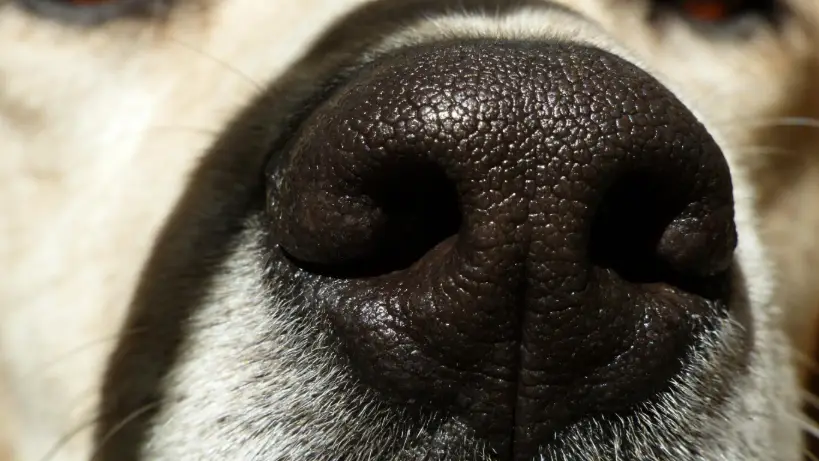
They’re also extra sensitive to their owner’s scent. Even if you’ve been gone for hours (or longer), they can feel your presence through the faint smells you left behind—and that’s why so many dogs are able to find their lost owners. Their wet nose isn’t just cute, either; the mucus layer helps dissolve more scent molecules, and every time they lick their nose, they’re refreshing their “scent-detecting system.”
One important thing to keep in mind, though: A dog’s sense of smell is delicate. Harsh cleaning products, strong perfumes, or other irritants can damage their nasal passages and dull this amazing natural talent.
Protecting Your Dog’s “Olfactory World” Starts with the Little Details
A dog’s sense of smell is a gift they’re born with—every dog’s ability is one-of-a-kind, and there’s no “better” or “worse” when it comes to their scent skills. This talent lets them experience a world we can’t even imagine, and it deepens the special bond we share with our pups.
If you notice your dog sneezing a lot, having a dry, cracked nose, or avoiding sniffing altogether, it could be a sign their sense of smell is off. That’s why we recommend reaching out to your vet for a professional check-up and care.
Respect your dog’s uniqueness, and take steps to protect their scent world—and you’ll let them experience this warm world in the way that’s most natural and comfortable for them.