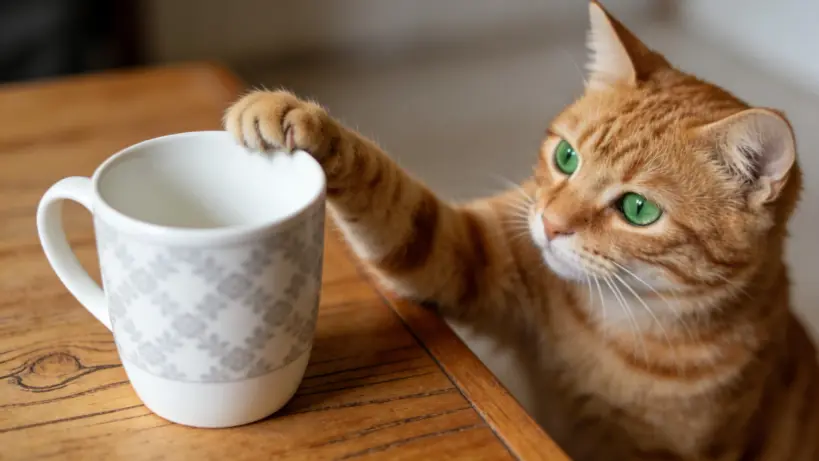
If you’re a cat owner, you’ve probably experienced the frustration: you turn away for a second, and your feline friend bats a mug, pen, or remote off the table—watching it fall with what feels like pure amusement.
Many of us laugh it off as “being naughty” or “attention-seeking,” but there’s a deeper reason behind this common behavior. Your cat isn’t being mean or mischievous; it’s acting on instincts passed down through thousands of years of evolution.
Every cat is unique, and while the core instincts driving this behavior are universal, the way your cat expresses it will be one-of-a-kind—shaped by their personality, environment, and bond with you. Let’s break down the real reasons behind this quirky habit.
Understanding these instincts can help you better connect with your cat and respond to their needs with patience.
Hunting Instinct: Simulating the Chase
Domestic cats may not need to hunt for their meals, but their predatory instincts are still deeply ingrained. To your cat, a small object on the table—like a pen or a coaster—looks like potential prey, such as a mouse or insect.
Pushing the object off the table mimics the act of stalking and pouncing. The way the item tumbles, rolls, or makes a sound when it hits the floor triggers their natural chase response, satisfying that primal drive to hunt.
Some cats will even chase the fallen object, completing the “hunt” cycle. This isn’t misbehavior—it’s your cat practicing the skills their ancestors relied on to survive.
This instinctual behavior is completely normal and a sign that your cat’s natural instincts are intact.
Curiosity and Cognitive Exploration
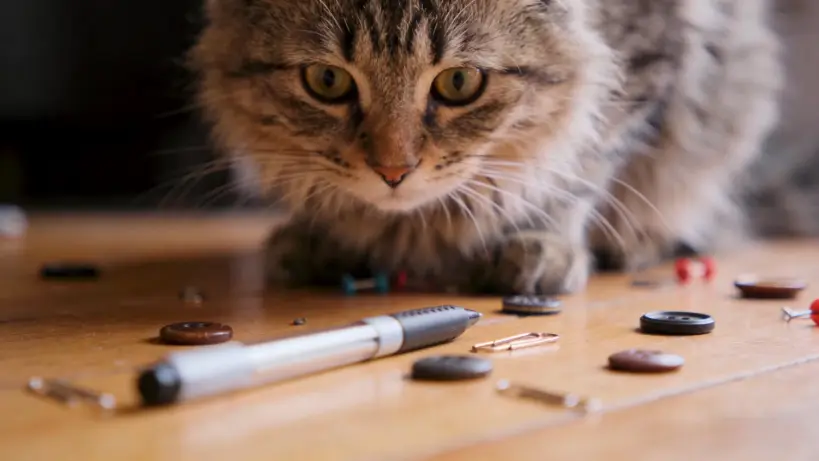
Cats are naturally curious creatures, and their paws are their primary tools for exploring the world. A cat’s paw pads are filled with sensitive nerve endings, allowing them to feel texture, weight, and movement.
When your cat pushes something off the table, it’s conducting a little experiment: What happens if I touch this? Will it move? Does it make a sound? This is a form of causal learning, helping them understand how their actions affect the environment around them.
Kittens are especially prone to this behavior as they learn about the world, but even adult cats continue to explore through these small, playful tests.
Exploration is key to a cat’s mental health, and this behavior is just one way they engage with their surroundings.
Seeking Attention (Even the “Negative” Kind)
Cats are smart—they quickly learn which behaviors get a reaction from their humans. If pushing an object off the table makes you rush over, talk to them, or even scold them, your cat sees that as attention.
To your cat, there’s no such thing as “negative” attention. Any interaction—whether it’s a laugh, a sigh, or a gentle “no”—is a reward, and they’ll repeat the behavior to get that connection with you.
This is especially true for cats who feel lonely or bored. If their environment lacks stimulation, pushing things off the table becomes a reliable way to engage with you.
Recognizing this can help you respond with affection rather than frustration when your cat seeks your attention.
Boredom and Excess Energy
Indoor cats often have more energy than they know what to do with, especially if they don’t get enough playtime or mental stimulation. Pushing things off the table is a simple way to entertain themselves and burn off pent-up energy.
If your cat pushes objects without chasing them, or moves from one item to the next, they’re likely just looking for something to break the monotony of the day. This behavior is their way of saying, “I need more fun!”
Every cat has different energy levels—some may rarely do this, while others make it a daily habit. It all depends on their unique personality and how well their needs are being met.
While most of these behaviors are harmless, it’s important to know when to seek professional guidance.
When to Talk to a Vet
For most cats, pushing things off the table is a normal, harmless expression of their instincts. However, if the behavior suddenly becomes more frequent, aggressive, or is paired with other unusual signs, it may be worth consulting a vet.
Sudden changes in behavior—such as increased destructiveness, lethargy, or loss of appetite—could indicate underlying health issues, such as stress, anxiety, or even vision or joint problems.
Remember, your vet is your best resource for understanding your cat’s unique needs. They can help you determine if the behavior is just instinct or if there’s something more going on.
With this understanding, you can embrace your cat’s unique quirks and strengthen your bond.
At the end of the day, your cat’s quirky habit is a reminder of their wild roots and their unique way of engaging with the world. Instead of getting frustrated, try providing them with more playtime, interactive toys, and safe objects to explore—they’ll still be curious, but they’ll have better outlets for their instincts.
After all, every cat is one-of-a-kind, and their little “mischief” is just part of what makes them your perfect feline companion.